
Managed IT vs In-House IT for Singapore SMEs (2026)
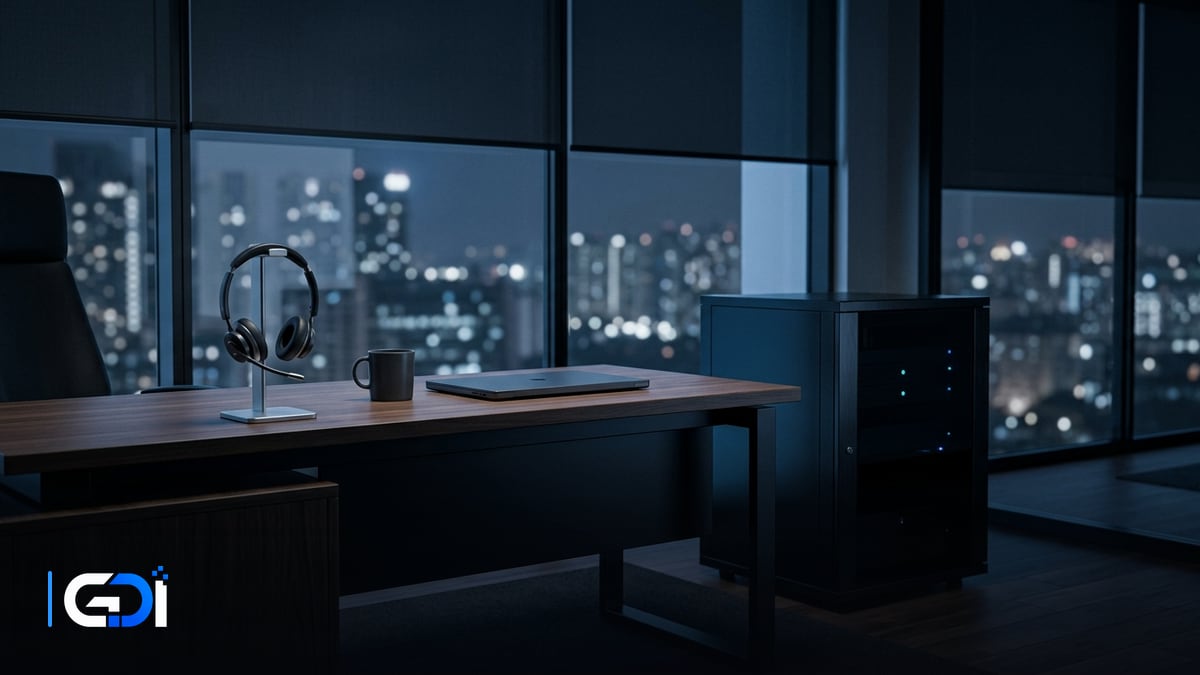
Singapore SME IT operations: Balancing on-premise hardware oversight with scalable cloud managed services.
For most Singapore SMEs under 50 staff, managed IT services cost significantly less than hiring an in-house IT employee. A standard managed retainer typically runs S$100 to S$180 per user monthly, whereas a single internal hire costs S$4,000 monthly before CPF, software, and benefits. In-house wins only when continuous on-site physical presence justifies a full-time payroll commitment.
How much does in-house IT really cost in Singapore?
When business owners calculate the cost of an internal hire, they frequently evaluate only the advertised basic salary on a job portal. In Singapore, the actual monthly cost to employ an IT professional is substantially higher once statutory obligations, benefits, tooling, and coverage risks are factored into operational budgets.
Under Ministry of Manpower (MOM) standards, basic salary forms the core of monthly employee compensation (source: MOM Salary Definitions & Calculation). Sourced recruitment data from Talent.com benchmarks the average IT support salary in Singapore at S$4,000 per month (translating to S$48,000 per year), with experienced roles reaching up to S$75,600 per year (source: Talent.com Singapore IT Support Salary Benchmark).
On top of basic monthly salary, Singapore employers must account for statutory contributions and operational overheads:
- Employer Central Provident Fund (CPF) contributions: Under CPF Board rules, employers contribute a mandatory 17% for Singapore Citizens and Permanent Residents aged 55 and below, subject to the statutory Ordinary Wage ceiling of S$8,000 per month (sources: CPF Contribution Rates and CPF Wage Ceilings). On an illustrative basic salary of S$4,000 per month, mandatory 17% employer CPF adds an illustrative S$680 per month (or an illustrative S$8,160 per year on S$48,000 annual basic pay).
- Statutory leave entitlements: Under the Singapore Employment Act, employees are entitled to paid annual leave, paid outpatient sick leave, hospitalisation leave, and childcare leave. When a single technician takes leave, business support pauses completely.
- Tooling & administration software: Internal technicians require professional tooling, including remote monitoring and management (RMM) software, ticketing licences, endpoint diagnostics, and cloud workspace pooled storage (source: Google Workspace Pricing).
Crucially, employing a single internal technician creates a single point of failure (SPOF). When that employee is ill, attends mandatory National Service (NS) reservist training, takes statutory annual leave, or resigns, internal IT operations come to an immediate halt.
What does managed IT cost per user in Singapore?
Managed IT service providers (MSPs) operate on a per-user, per-month subscription model. In Singapore, market surveys published by TechEase indicate that overall managed IT pricing ranges from S$60 to S$250 per user per month, with the core SME standard support tier priced between S$100 and S$180 per user per month, and advanced tiers ranging up to S$300 per user per month (source: TechEase Singapore Managed IT Pricing Survey). In the market, entry-level retainers start from S$89 per user per month from providers such as Evernet (source: Evernet Systems Managed IT Services). Quotes are typically exclusive of GST for GST-registered providers; GDI Solutions is not GST-registered.
A comprehensive managed IT plan for a Singapore SME includes:
- Helpdesk & remote support: Direct user ticket resolution for operating systems, printers, email client configuration, and desktop software troubleshooting.
- Automated patch management: Scheduled updates and security patches across Windows and macOS workstations to remediate operating system vulnerabilities.
- Cloud identity administration: Managing user provisioning, onboarding, offboarding, and multi-factor authentication (MFA) across cloud workspace platforms.
- Endpoint backup & disaster recovery: Scheduled backups of endpoint documents and cloud drives, paired with periodic restoration tests.
- Asset inventory & vendor coordination: Maintaining records of hardware warranties and software licences, and escalating directly with internet service providers (ISPs) and hardware vendors.
- Monthly executive reporting: Plain-language summaries of ticket resolution times, device patch compliance, and upcoming renewal dates.
The cybersecurity licensing boundary (what managed IT should not claim)
Buyers must understand regulatory boundaries. Under the Singapore Cybersecurity Act, establishing a licensing framework for cybersecurity service providers governs licensable penetration testing and managed security operations centre (SOC) monitoring (source: CSA Cybersecurity Act Licensing Framework).
General managed IT support covers essential security hygiene—configuring MFA, restricting administrative privileges, updating software patches, setting up email authentication (SPF, DKIM, DMARC), and maintaining off-site backups to support compliance with the Personal Data Protection Act (PDPA). Standard MSP contracts do not provide, and should not claim to provide, licensable penetration testing or SOC monitoring unless specifically licensed.
Cost comparison: in-house hire vs managed IT (10, 25, and 50 users)
To evaluate break-even economics honestly, compare the illustrative monthly outlay of a full-time in-house hire (S$4,000 monthly basic salary plus S$680 mandatory 17% employer CPF) against illustrative managed IT plans across standard market rates of S$100 to S$180 per user per month.
| Company Size | In-House IT (Illustrative Base + CPF) | Managed IT (Illustrative S$100 to S$180/User/Mo) | Annual Spend Comparison | Operational Verdict |
|---|---|---|---|---|
| 10 Users | S$4,000 base + S$680 CPF monthly | Illustrative S$1,000 to S$1,800 per month | Managed IT: illustrative S$12,000 to S$21,600 per year vs S$48,000 basic salary | Managed IT is vastly more economical; hiring full-time commits substantial unnecessary overhead for 10 users. |
| 25 Users | S$4,000 base + S$680 CPF monthly | Illustrative S$2,500 to S$4,500 per month | Managed IT: illustrative S$30,000 to S$54,000 per year vs S$48,000 basic salary | Managed IT delivers multi-engineer depth for comparable or lower monthly outlay than a solo hire. |
| 50 Users | S$4,000 base + S$680 CPF (up to S$75,600/yr for senior roles) | Illustrative S$5,000 to S$9,000 per month | Managed IT: illustrative S$60,000 to S$108,000 per year vs S$48,000 basic salary | Financial parity threshold. Decision hinges on daily on-site physical workloads versus multi-tier coverage depth. |
The illustrative figures demonstrate clear economics:
- At 10 users: Managed IT costs an illustrative S$1,000 to S$1,800 per month (illustrative S$12,000 to S$21,600 per year). Hiring an internal employee committing S$4,000 monthly basic salary (S$48,000 per year) represents unnecessary payroll overhead.
- At 25 users: Managed IT costs an illustrative S$2,500 to S$4,500 per month (illustrative S$30,000 to S$54,000 per year), offering broad multi-specialist coverage without vacation or sick leave disruptions.
- At 50 users: The spend reaches parity around an illustrative S$5,000 to S$9,000 per month (illustrative S$60,000 to S$108,000 per year). At this stage, businesses evaluate whether they need a physical technician on premise or multi-tier SLA coverage.
When does in-house IT win?
A managed service provider who claims outsourcing is always superior is not being candid. There are specific operational scenarios in Singapore where hiring an internal IT employee makes superior business sense:
- Daily physical hardware intervention: If your operations involve continuous physical equipment handling—such as testing warehouse barcode scanners, managing local assembly line hardware, or running frequent physical workstation moves—an on-site person resolves issues immediately without dispatch wait times.
- Highly proprietary or legacy custom software: If your company relies on bespoke internal applications developed in-house without documentation, an internal employee who works with the codebase daily will navigate its idiosyncrasies better than an external team.
- High internal ticket velocity: In fast-paced trading desks, creative studios, or customer-facing operations where employees submit dozens of rapid walk-up requests daily, having an immediate physical desk to approach provides convenience that remote helpdesk queues cannot replicate.
- Organisations scaling past 100 users: Once a company grows past 100 users, the total IT budget readily supports an internal department with dedicated hierarchy (helpdesk, network administrator, and an IT manager).
The hybrid alternative: co-managed IT
For Singapore organisations with between 40 and 100 staff, the choice does not have to be binary. Many businesses achieve a pragmatic operational balance through co-managed IT.
In a co-managed arrangement:
- Your internal IT executive remains on-site to handle immediate physical desk-side support, user onboarding handoffs, hardware swaps, and company-specific workflows.
- The external managed provider acts as the force multiplier behind the scenes: managing cloud infrastructure, maintaining endpoint monitoring, handling automated patching, managing cloud backups, and providing tier-2 and tier-3 escalation when complex network or server faults occur.
This eliminates technician burnout, ensures continuous support when your internal IT staff member is on statutory leave under the Employment Act, and frees internal staff from repetitive maintenance tasks.
How GDI approaches managed IT
GDI Solutions provides remote-first managed IT services and ongoing IT maintenance support for Singapore businesses running on modern cloud stacks.
Our approach is designed around operational efficiency rather than inflating retainer hours:
- Remote-first with accountable escalation: Most software, account, and configuration issues are resolved remotely within minutes using secure management tooling. When hands-on physical intervention is required for networking or office setup, we schedule coordinated site attendance.
- Intelligent ticket triage: We use structured classification to ensure urgent blockers (such as payment failures, locked administrative accounts, or offline services) bypass routine queues and alert our engineers immediately.
- Proactive hygiene over reactive firefighting: We manage automated patch cadences, cloud workspace identity controls, and backup replication tests so issues are prevented before your team encounters an outage.
- Transparent monthly reporting: You receive concise, factual reports detailing resolved tickets, endpoint patch status, and upcoming hardware renewals in plain Singapore English, with zero technical jargon.
- Honest architectural counsel: If your headcount, physical requirements, or internal software mean an in-house hire or co-managed model is the more economical choice, we will advise you directly. Note that routine ongoing IT maintenance contracts are operational expenses ineligible for productivity grants like the EDGE Grant. If you are also planning internal applications or digital tooling, you can evaluate development budgets with our free Software Cost Estimator.
To discuss your current IT setup and get a clear, fixed quote based on your exact user count, reach out through our project enquiry desk.
Frequently asked questions
Is managed IT cheaper than hiring an in-house IT employee in Singapore?
For most Singapore SMEs with under 50 staff, yes. Sourced market pricing indicates standard managed IT retainers typically cost S$100 to S$180 per user monthly (or S$1,000 to S$1,800 per month for 10 users), whereas an internal IT hire averages S$4,000 per month in base salary (S$48,000 per year) before mandatory 17% employer CPF (S$680 monthly), leave entitlements, and software tooling.
At what headcount does in-house IT break even with managed services?
The financial crossover typically occurs around 45 to 55 users. For an illustrative team of 50 users, standard managed IT runs S$5,000 to S$9,000 monthly (S$60,000 to S$108,000 annually), roughly matching or exceeding the loaded cost of one internal engineer. However, solo hires represent a single point of failure, prompting many 50-user firms to adopt a hybrid co-managed model.
What happens when our only in-house IT hire goes on leave or resigns?
Operational coverage drops to zero. Under the Singapore Employment Act, employees receive mandatory annual leave, sick leave, and childcare leave entitlements. When a solo technician is on leave or resigns, user support halts and outages go unaddressed. A managed service provider maintains shared engineering coverage without vacation downtime.
Does managed IT include penetration testing or SOC monitoring?
No. Under the Singapore Cybersecurity Act, establishing a licensing framework for cybersecurity service providers governs licensable penetration testing and SOC monitoring. Standard managed IT delivers foundational security hygiene: multi-factor authentication (MFA), patch cadence, off-site backup, and email authentication.
Can Singapore SMEs claim government grants like the EDGE Grant for managed IT retainers?
No. Routine ongoing IT maintenance retainers and operational helpdesk contracts are standard operational expenditures and do not qualify for grant support under the EDGE Grant. On 29 September 2026, EDG, PSG, and MRA closed to new applications and were replaced by the EDGE Grant on 30 September 2026 (offering up to 50% support for SMEs, capped at S$100,000 per company). GDI Solutions is not a pre-approved vendor, and routine operational IT support should never be budgeted expecting grant funding.
Put this into practice
- Cloud Solutions
Migrate, run and optimise cloud on AWS, Azure, GCP and M365 — one accountable partner.
- Cybersecurity
Find and fix real weaknesses — assessment, hardening and Cyber Essentials readiness.
- Managed IT
Fully-managed IT support, helpdesk and monitoring for M365 and Google Workspace.
- IT Infrastructure
Structured cabling, secure networks, enterprise WiFi and full new-office IT setup.
Want a fixed quote for your project?
Describe what you need built. GDI replies in writing, usually within one business day, and a fixed price follows a short scoping call.
Start a project brief