Business Intelligence Tools for Singapore SMEs: Where to Start
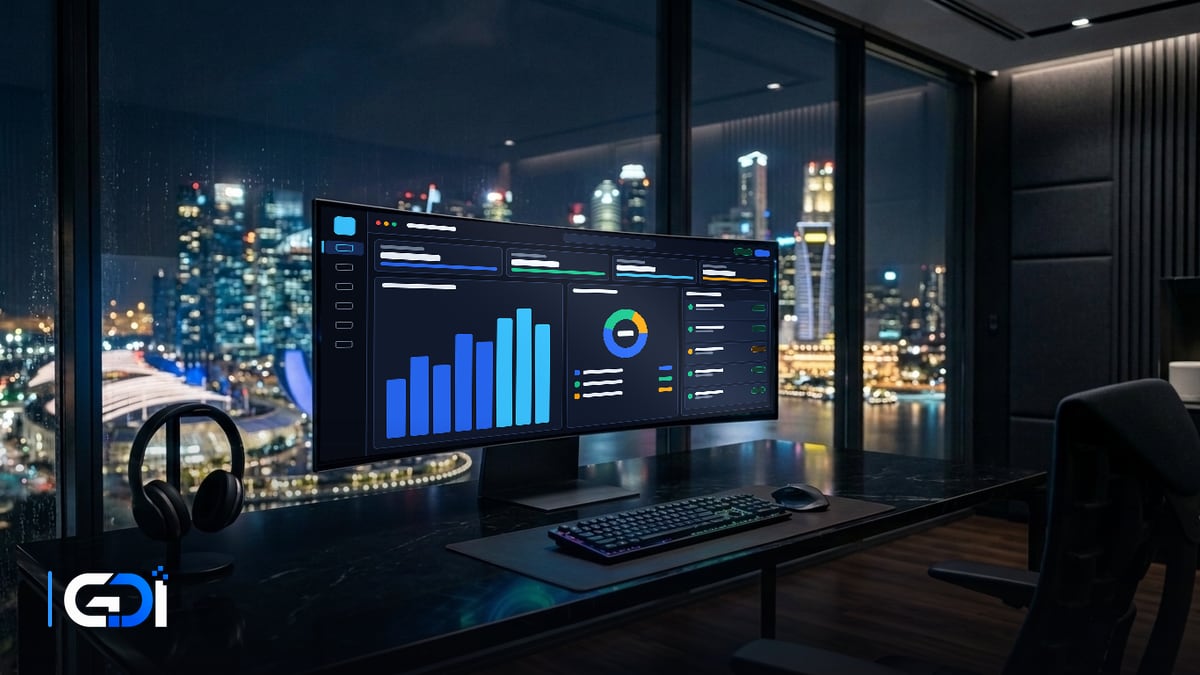
Business intelligence (BI) tools turn the data already sitting in your sales, accounting and operations systems into dashboards that update themselves. For a Singapore SME, the right BI setup starts with five or six questions management asks every week, a single agreed source for each number, and only then a tool to display them.
General guidance as at 20 October 2026.
When does an SME actually need business intelligence?
You need BI when reports are rebuilt by hand on a schedule, when numbers from two systems disagree, or when decisions wait for someone to pull data. Typical signs:
- A staff member spends hours each month copying exports into a spreadsheet.
- Sales, inventory and accounting each give a different answer to “how did we do last month?”.
- Branch or outlet performance is only compared at year end.
- Nobody can say quickly which products, customers or channels make money after costs.
What should the first dashboard show?
Start with the few numbers that change decisions, not every number you can chart. A practical first set for most SMEs:
| Question | Usual source | Watch out for |
|---|---|---|
| How much did we sell, by week and by channel? | POS, e-commerce, invoicing | Returns and refunds counted consistently |
| What did it cost to deliver? | Accounting, purchasing | Costs posted late or in the wrong month |
| Who owes us money, and for how long? | Accounting | Unapplied payments that make debts look bigger |
| Which leads became customers? | CRM | Leads with no recorded source |
| What is in stock, and what is not moving? | Inventory, POS | Stock counts not reconciled |
Which kind of BI tool fits?
Use the reports built into your existing systems first, a self-service BI tool when data comes from several systems, and a custom dashboard when the logic is specific to your business.
- Built-in reports: free with your accounting, POS or CRM software, and enough for many small businesses.
- Self-service BI tools: connect several data sources and let your team build reports; they need someone who maintains the data model.
- Custom dashboards: built around your own calculations, such as job costing or commission rules, and embedded where staff already work.
How do you set up BI without wasting money?
- List the weekly and monthly questions management asks.
- For each question, agree the definition and the one system that is the source of truth.
- Fix data quality at the source, for example missing lead sources or late cost postings.
- Automate the data flow from each system, rather than relying on manual exports.
- Build the first dashboard, use it for a month, then add only what people actually asked for.
What about personal data in dashboards?
Keep management dashboards at the level of totals and trends, and restrict access to record-level detail. Personal data in a BI tool is still personal data: the PDPC’s Protection Obligation states that “Reasonable security arrangements have to be made to protect the personal data in your organisation’s possession”.
How GDI Solutions helps
We connect the systems you already run, agree the definitions with you, and build dashboards that update on their own, whether in a self-service BI tool or as a custom dashboard inside your own system. We start from your management questions, not from a chart gallery.
See our data analytics & BI service, read about building vs buying a CRM or ERP, or start a project.
Frequently asked questions
What is a business intelligence (BI) tool?
A BI tool pulls data from the systems you already use, such as sales, accounting, inventory and your CRM, and turns it into dashboards and reports that update on their own. Its job is to answer the same management questions every week without someone rebuilding a spreadsheet.
Does a small business in Singapore need a BI tool?
Only when the same reports are rebuilt by hand every week or month, or when numbers from different systems disagree. If one system already gives you the reports you need, a BI tool adds cost without adding answers.
What usually goes wrong with BI projects?
Dashboards built before anyone agreed what the numbers mean. If sales and finance define revenue differently, a dashboard only shows the disagreement faster. Agree definitions and the source of each number first, then build.
Can BI dashboards include personal data?
They can, but most management dashboards do not need names or contact details. Show totals and trends, limit who can drill into individual records, and remember that personal data in a dashboard is still covered by the PDPA's protection obligation.
Want a fixed quote for your project?
Describe what you need built. GDI replies in writing, usually within one business day, and a fixed price follows a short scoping call.
Start a project brief