Tuition Centre Management Systems in Singapore: A Practical Guide
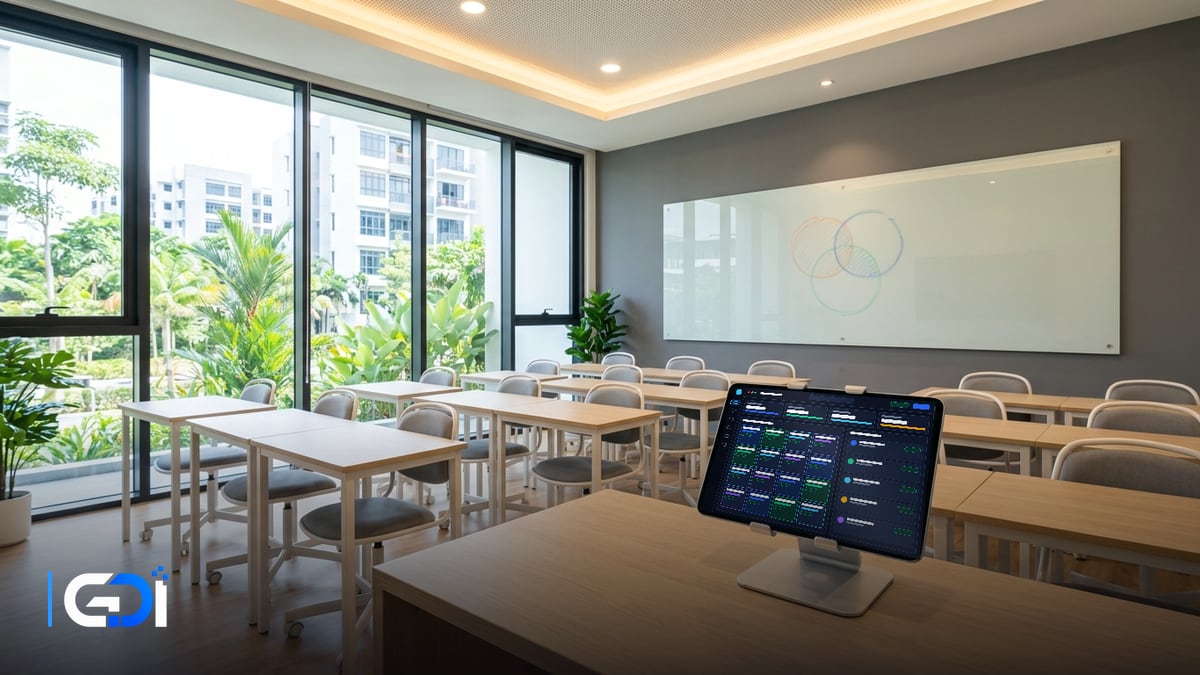
A tuition centre management system handles the admin that eats a centre’s evenings: schedules, enrolment, attendance, make-up lessons, fee invoices, payments and parent messages, in one place. In Singapore it also has to handle children’s personal data correctly, which for students below 13 means consent from a parent or guardian.
General guidance as at 21 October 2026. It is not legal advice.
Which features matter most for a tuition centre?
Start with the features that remove weekly admin: scheduling, attendance and fees.
| Feature | What it saves | Check |
|---|---|---|
| Class and room scheduling | Double-booked rooms and tutors | Can it handle term breaks and public holidays? |
| Attendance | Paper registers | Can tutors mark attendance on a phone? |
| Make-up lessons | Untracked credits and disputes | Are make-up rules and expiry enforced automatically? |
| Fee invoices and payments | Chasing and reconciling fees | PayNow QR on invoices, and automatic “paid” status? |
| Parent messages | One-by-one WhatsApp updates | Messages tied to the student record, with a history |
| Reports | Guesswork on class sizes and income | Enrolment and income by class, level and branch |
What does the PDPA mean for student data?
Children’s data needs the right consent and careful access control. PDPC’s advisory guidelines on children’s personal data state: “Where the child is below 13 years of age, the organisation must obtain consent from the child’s parent or guardian.” For older children, the guidelines say “a child between 13 and 17 may give valid consent, when the policies on the collection, use and disclosure of the child’s personal data, as well as the withdrawal of consent, are readily understandable by them”, and note that an education setting may decide it is more prudent to obtain a parent’s consent.
In system terms, that means:
- a consent record for each student, with who gave it and when;
- tutors see only their own classes, and admin access is limited;
- no student names or results on shared screens;
- a clear way to update or withdraw consent and to remove data you no longer need.
One branch or several: what changes?
Multi-branch centres need shared students and packages across branches, and reports per branch. Look for transfers between branches, tutors who teach at more than one location, central pricing with branch exceptions, and combined income and enrolment reports.
How do you move to a new system?
- List your class types, packages, make-up rules and fee terms.
- Clean the student and parent list, and confirm consent records.
- Set up one term in the new system and run it alongside the old one for a month.
- Move fee invoicing last, once attendance and schedules are trusted.
- Tell parents how invoices and messages will change before the switch.
How GDI Solutions helps education businesses
We build web apps and business systems for Singapore SMEs, including scheduling, attendance, PayNow-ready invoicing and parent portals, with consent records and role-based access designed in from the start. Where an off-the-shelf product fits, we help you set it up and connect it to your other systems instead.
See our web application development and custom software services, read about PDPA-compliant software, or start a project.
Frequently asked questions
What does a tuition centre management system do?
It runs the daily admin of a centre in one place: class schedules and rooms, enrolment, attendance, make-up lessons, fee invoices and payments, and messages to parents. Larger centres add tutor timetables, a parent portal and reports by class and branch.
Do we need parents' consent to store students' details?
For children below 13, PDPC's advisory guidelines on children's personal data say the organisation must obtain consent from the child's parent or guardian. For ages 13 to 17 a child may consent if the policies are readily understandable to them, and an education setting may decide parental consent is more prudent.
Can parents pay fees by PayNow through the system?
Yes. Invoices can carry a PayNow QR code, and with a payment integration the system can mark fees as paid when the payment arrives, so staff do not reconcile transfers by hand.
Off-the-shelf software or a custom system?
Small centres with standard classes usually start with an off-the-shelf product. Custom systems make sense when you run several branches, unusual packages or make-up rules, or want your own parent app and reports.
Want a fixed quote for your project?
Describe what you need built. GDI replies in writing, usually within one business day, and a fixed price follows a short scoping call.
Start a project brief